The 2 mirror trick
Three weeks ago a friend texted me a screenshot. Two browser tabs, side by side: Linode 2GB Shared, $12. DO Basic Regular Intel 2GB 1v, $12. 1 vCPU on each. 50GB of disk on each. 2TB of egress on each. "They look identical — does it matter which one I pick?" The honest answer took me a longer reply than he wanted, because the $12 number is the last thing about these two companies that still rhymes.
Almost every "Linode vs DigitalOcean" article on page one of Google reads off that mirror, calls it a tie, and ranks each side on customer service. That was a fine framing in 2022. In 2026 it's the laziest read of these two companies on the internet. Underneath the matching $12 row, Linode and DigitalOcean have spent the last two years walking in opposite directions — and the question for anyone signing up this quarter isn't who has better benchmarks, it's which roadmap you want to be tied to for the next three to five years.
Short version, before I show my work:
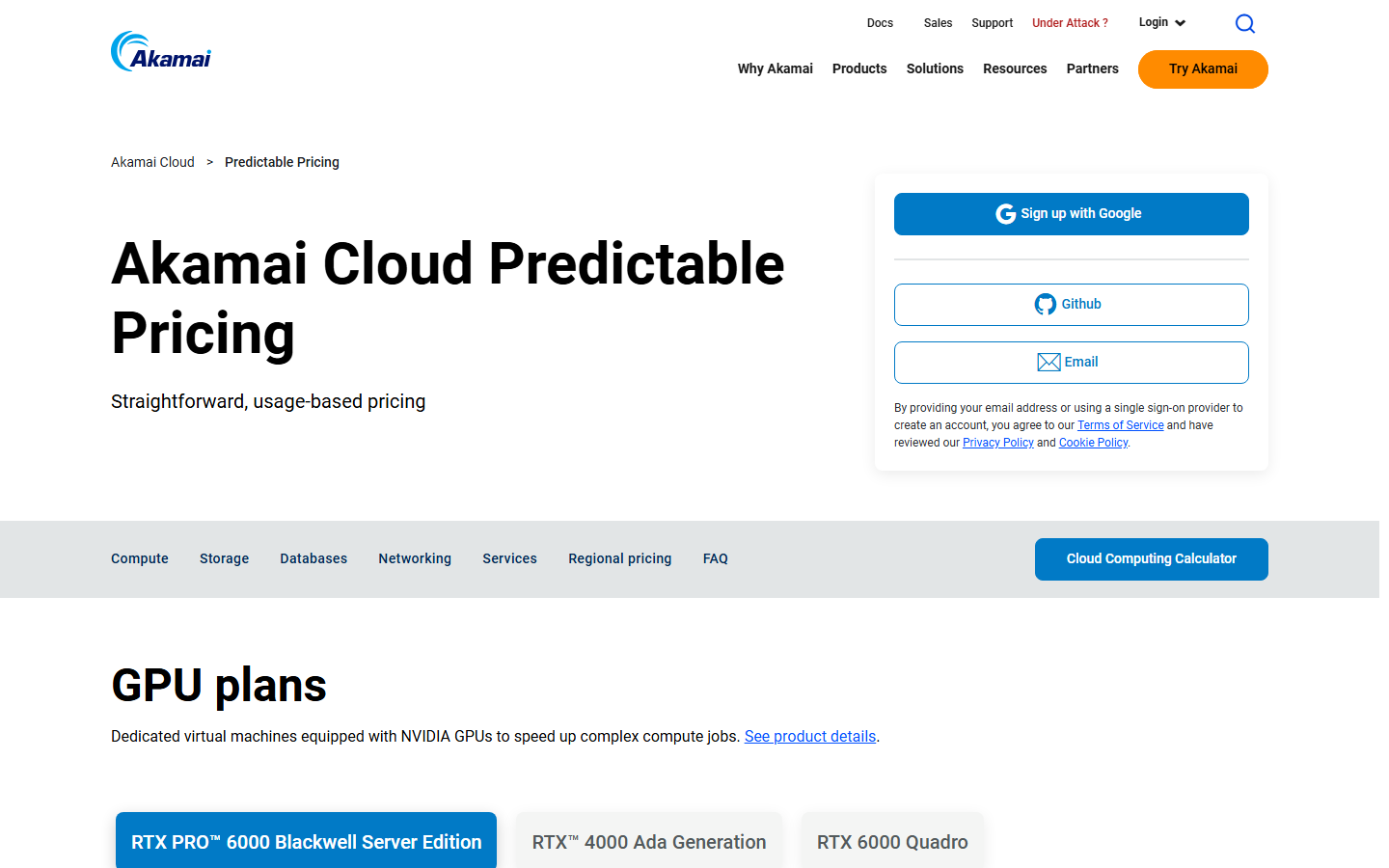
- Akamai bought Linode for $900M in 2023, raised prices 20% across the Shared CPU line in 2024, doubled the additional IPv4 fee, and is steering the brand toward enterprise edge compute. The Linode name itself was retired during 2026.
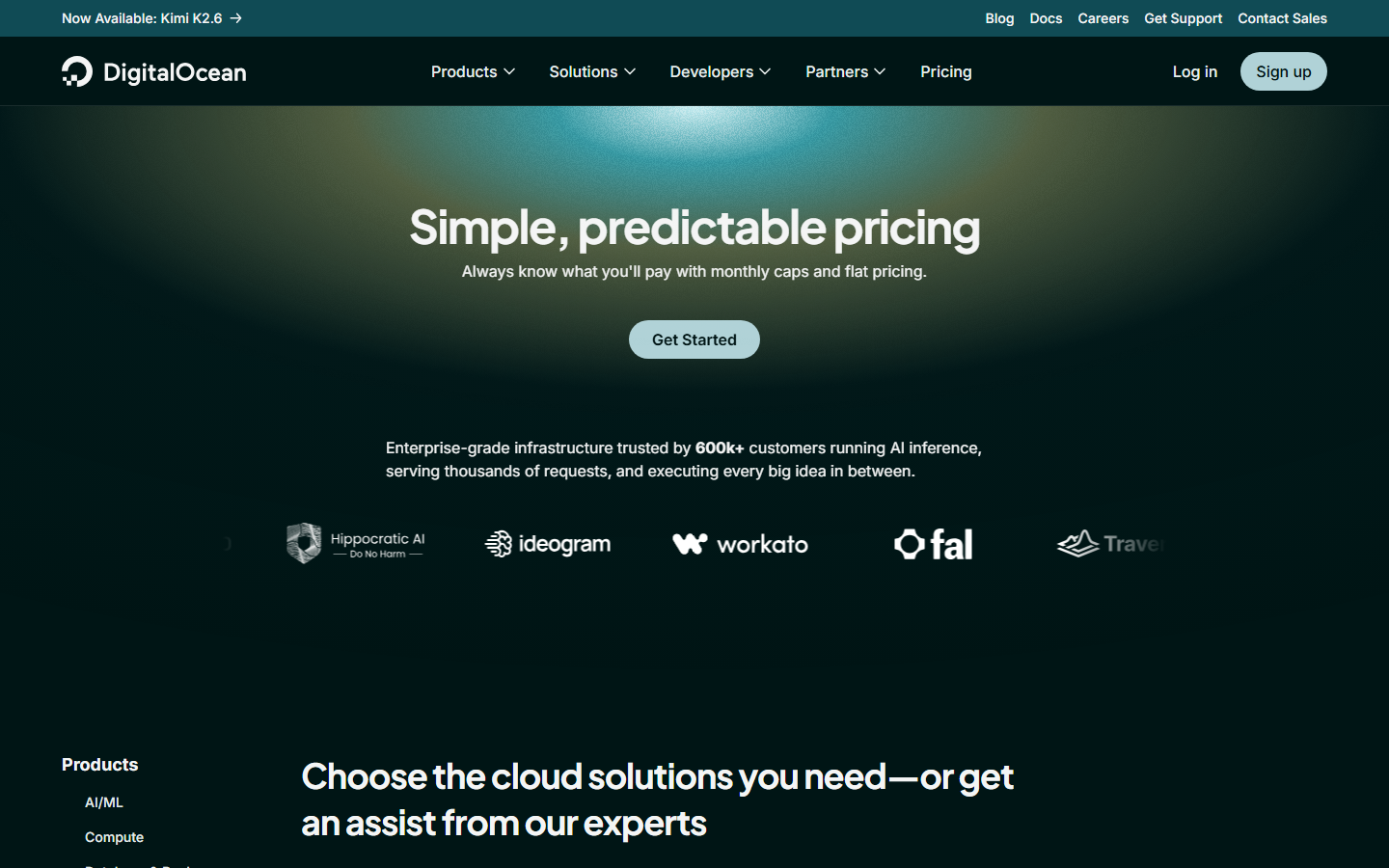
- DigitalOcean spent the same window pulling in the other direction: per-second billing live on January 1, 2026, an entry Premium NVMe droplet at $7/month, a Heroku migration credit, and Gradient AI tying GPU inference into the same dashboard.
If you only need a server for the next two months, the $12 plans really are interchangeable. If you're spinning up infrastructure you'll still be paying for in 2028, they aren't. This article is for the second case.
What changed after Akamai bought the Linode brand
The 2003-era developer cloud that everyone remembers is gone. Here's the timeline that matters for a buying decision today, with sources you can verify:
| Year | Linode (Akamai) | DigitalOcean |
|---|---|---|
| 2023 | Acquired by Akamai for $900M; product team folded into Akamai Connected Cloud. | Premium Intel/AMD droplets pushed as default upsell; NVMe storage rolled out across Basic Premium tier. |
| 2024 | Shared CPU prices raised ~20% (2GB $10→$12, 4GB $20→$24, 16GB $80→$96). Additional IPv4 fee doubled. Distributed Compute Regions launched as limited availability. | Quiet year. Mostly Marketplace expansion and managed Postgres/Redis push. |
| 2025 | Account verification tightened; community forum fills with "fraudulent behavior" auto-cancellations from new signups using VPNs, fresh email addresses, or non-US phone numbers. | Heroku migration credit launched after Salesforce raised Heroku prices. DO positions itself as the "Heroku alternative" landing page for the year. |
| 2026 Q1 | The "Linode" brand is fully retired into Akamai Cloud Computing; pricing page now lives on akamai.com. | Per-second billing goes live Jan 1, 2026 (60-second minimum, $0.01 floor). Bring-your-own-IP and managed NAT Gateway ship same week. Gradient AI integrates with Anthropic and OpenAI inference. |
The 20% increase in 2024 wasn't subtle. LowEndBox covered it under the headline "Two Weeks After Killing the Linode Brand, Akamai Jacks Up Prices 20% and Doubles IP Fees," and their summary of what users were saying in the threads is the cleanest read I've found:
"Many users pointed out that Linode's claim to remain 'more aggressively priced' than their peers simply wasn't true anymore."
— LowEndBox, 2024
I felt the IPv4 piece personally. In 2024 I was helping an Atlanta SaaS client trim their infra bill. They had thirty small Linode 4GB nodes, each with one extra IPv4 address for legacy SMTP and TLS reasons. The per-IP fee jumped from $1 to $2/month. Across the fleet that was an extra $30/month, $360/year, for nothing they got out of it. I remember the spreadsheet that night — three columns, the IPv4 line in red — and the founder typing back, "this is the second 'small' increase this year, isn't it." That sentence sat with me longer than the migration did. We moved to DO 4GB Basic Regular at $24/month, which at the time was the same headline price but didn't carry the IPv4 markup the same way. The migration wasn't because DO was technically better — it was because Linode had stopped competing on the line item that was actually moving the bill, and that "second small increase" line was the moment I started telling people Akamai is a different company even when the URL still says linode.com.
So the first thing to absorb: Linode is not the same company you bookmarked in 2018. The product and the price book are now Akamai's, and Akamai's strategy is "Connected Cloud" — meaning the long-term bet is on edge PoPs adjacent to their CDN, not on $5 hobby instances.
What DigitalOcean did during the same window
The thing I missed at the time, and a lot of the comparison articles still miss, is that DigitalOcean made the exact opposite move. While Akamai was pulling Linode upmarket, DO spent two years making the entry-level cheaper and the billing more granular.
The headline change is per-second billing. As of January 1, 2026, DO bills any Droplet by the second with a 60-second minimum and a $0.01 floor, capped at the published monthly rate. For someone spinning up CI runners or short-lived test environments, that's the difference between paying $0.01 to verify a build and paying for the whole hour. It's also the change that quietly killed the case for using Heroku-style buildpacks for short-lived workloads — the "I only need it for ten minutes" math now favors DO.
The second piece is the Premium NVMe entry tier. DO's Basic Premium Intel/AMD 1GB at $7/month gets you NVMe storage and current-generation Intel or AMD silicon. Linode's nearest comparable is the Nanode 1GB at $5/month — cheaper by two bucks, but it's still SATA SSD on the Shared CPU line, which is where Akamai has not refreshed hardware aggressively. If you care about disk latency at the entry tier, DO has a path Linode doesn't.
The third piece is Gradient AI. DO now sits inside the same console as a managed inference layer for Claude and GPT-class models, with a per-token billing arm that doesn't require you to provision a GPU droplet just to test a prompt. Akamai has nothing equivalent on the Linode side; they sell GPU instances but the AI layer above them belongs to partner integrations.
None of this makes DO universally better. It makes DO's roadmap legibly aimed at "the indie developer who used to start on Heroku, then graduated to a $20 droplet, and now wants to bolt on AI inference without leaving the dashboard." Akamai's roadmap is aimed at "the Fortune 500 buyer who already has an Akamai account and wants edge compute next to their CDN." Those are not the same customer.
Same price, different hardware
Once you internalize that the two companies are pulling in opposite directions, the next thing to look at is what you actually get for the money at each tier. Here's the matched-tier table I built off the verified pricing pages and the publicly available VPSBenchmarks comparison runs:
| Monthly | Linode (Shared CPU) | DigitalOcean |
|---|---|---|
| $5–$7 entry | Nanode 1GB: 1 vCPU / 1GB / 25GB SATA SSD / 1TB egress — $5/mo | Basic Regular 512MB: 1 vCPU / 512MB / 10GB SSD / 500GB — $4/mo Basic Regular 1GB: 1 vCPU / 1GB / 25GB SSD / 1TB — $6/mo Basic Premium 1GB: 1 vCPU / 1GB / 25GB NVMe / 1TB — $7/mo |
| $12 | Linode 2GB Shared: 1 vCPU / 2GB / 50GB SSD / 2TB | Basic Regular Intel 2GB 1v: 1 vCPU / 2GB / 50GB SSD / 2TB |
| $24 | Linode 4GB Shared: 2 vCPU / 4GB / 80GB SSD / 4TB. VPSBenchmarks single-core sysbench ~74% faster than DO at this tier; 4k random IOPS ~75% higher. | Basic Regular 4GB: 2 vCPU / 4GB / 80GB SSD / 4TB |
| $36 | Dedicated CPU 4GB: 2 vCPU / 4GB / 80GB SSD — $36/mo (different SKU; non-shared cores) | No exact match at $36; nearest is CPU-Optimized Basic 4GB at $42/mo (2 vCPU / 4GB / 25GB / 4TB) |
| $48 | Linode 8GB Shared: 4 vCPU / 8GB / 160GB SSD / 5TB | Basic Regular 8GB: 4 vCPU / 8GB / 160GB SSD / 5TB |
| $84–$96 | Linode 16GB Shared: 6 vCPU / 16GB / 320GB SSD / 8TB — $96/mo | Memory-Optimized 16GB: 2 vCPU / 16GB / 50GB SSD / 4TB — $84/mo (RAM-heavy; not a Linode 16GB equivalent) |
Two things to take away from this table.
First, at the $24 / 4GB Shared tier, Linode hardware actually wins on raw single-core throughput and 4k IOPS in the public VPSBenchmarks runs. If your workload is single-threaded — a Postgres node doing a lot of small random reads, a Ruby app server, a build worker — the Linode 4GB at $24 outperforms the DO Basic Regular 4GB at $24 by a non-trivial margin. This is the part of Linode that the brand-cleanup obscures: Akamai didn't ship slower silicon, they just charged more and stopped marketing.
Second, at the entry tier the picture flips. The cheapest Linode is still on the older SATA storage path. DO's entry Premium pulls you onto NVMe and a current-gen Intel or AMD chip for the price of a sandwich more per month. If you're picking a tiny instance where disk I/O matters more than CPU — small Postgres, image-heavy WordPress, anything write-bound — that's not a $2 upgrade, it's a different product class.
And one piece of nomenclature you have to translate, because the two companies use the same words for different things:
| Marketing label | What it means at Linode/Akamai | What it means at DigitalOcean |
|---|---|---|
| "Shared" | Shared CPU line. Older Intel silicon on most regions; the price-bump line from 2024. | Basic Regular. Shared neighbor CPU, SSD by default; "Premium" is a sibling SKU with NVMe and newer chips. |
| "Premium" | Akamai doesn't market a "Premium Shared" tier; you go from Shared to Dedicated. | Basic Premium Intel/AMD: NVMe + newer-gen CPU at the same RAM/vCPU as Basic Regular, $1–$3 more per month at small sizes. |
| "Dedicated" | Dedicated CPU instances, non-shared cores. Entry at 4GB / $36. The newer AMD EPYC gear lives here, not on Shared. | CPU-Optimized droplets — closest equivalent — but at 4GB they cost $42, not $36. |
If you do a feature-for-feature comparison without translating these labels, you'll think you're comparing like for like and you won't be.
The wall before the benchmark — Akamai's verification gate
Now the part that breaks every "but Linode wins on benchmarks" article. The benchmarks only matter if you can sign up.
Starting roughly mid-2024 and getting worse through 2025, the Linode community forum filled with new-account holders whose signups got auto-rejected. The pattern, repeated across at least four widely-read questions on linode.com/community (22948, 21583, 23107, 24619), is the same: you sign up, you put in your card, the dashboard says "verifying," and within minutes you receive a cancellation email citing fraudulent activity. No appeal path that works for most people. The community-question phrasing is uncannily consistent across users:
"Recently created accounts have been denied activation due to activity or patterns associated with fraudulent behavior, with additional signup attempts also being rejected."
— recurring report, linode.com/community/questions/22948
The triggers, as far as anyone has reverse-engineered them: a brand-new email address, signup from a VPN or non-residential IP, a non-US phone number, or a payment card whose billing country doesn't match the IP geolocation. Hit two or three of those and the Akamai fraud system auto-cancels you. This is enterprise-grade fraud screening retrofitted onto a developer signup flow, and it eats a meaningful slice of would-be customers.
Two related signals tell you this isn't a fringe issue. Linode's G2 score is 4.6, fed by developers who passed the gate years ago and are happy with the product. Linode's Trustpilot score is 2.0, fed disproportionately by people who hit the wall. Trustpilot reviewers in 2025 and 2026 keep saying the same thing in different words:
"Since Akamai took over, hardware and services don't run as quickly, with reboots and backups taking longer, plus major outages that never occurred in previous years."
— Trustpilot, www.linode.com (recurring 2025–2026)
Both numbers are real. The 4.6 reflects the experience inside the wall. The 2.0 reflects the experience hitting the wall, or hitting the support queue when something goes wrong. If you're inside the wall — US developer, US card, normal residential connection, established account — you'll find Linode's API, CLI, docs, and StackScripts roughly as good as you remember. If you're outside it — overseas indie, VPN user, virtual phone number — you may not even get to test that.
This is the inversion that a lot of 2025 vintage Linode reviews missed. The benchmark numbers are real, but they're a description of an experience that not everyone gets to have. DigitalOcean's signup flow is comparatively forgiving — international cards and non-US billing addresses go through without a fraud-flag intervention in the cases I've watched in the last year. The same fingerprint walks into a wall on Linode more often than not.
DigitalOcean's quieter trap — the 14-day silence
I'm not letting DO off the hook for this one. The verification gate is Akamai's loud problem. DO's quiet equivalent is the suspension policy.
If your card fails and DO can't bill you, your droplet is suspended. After 14 days of suspension, the droplet — and any attached volumes — is permanently destroyed. That's documented. What's not as obvious from the dashboard is that during the suspension window, your droplet shows status "off" rather than "destroyed" or "scheduled for deletion." It looks like a droplet you powered down for the weekend, not one with a 14-day countdown to deletion attached.
Trustpilot reviews of DigitalOcean from early 2026 include multiple cases of users finding out their data was gone after they paid the outstanding bill. They saw the droplet still listed. They updated the card. They expected to power it back on. The droplet was already deleted; only the dashboard skin survived.
The verdict, before any workaround talk: do not run anything you can't afford to lose on a single DigitalOcean droplet without an external backup. Not "use snapshots" — snapshots live in the same account and disappear with the same suspension. The bar is "off-account, off-platform" — anything that survives an account-level event. If your billing email goes to a deserted inbox during a card expiration, you have two weeks before the data is gone. (For the practical setup that survives this — and the recovery path if you're already in the suspension window — see the FAQ. Workarounds belong there, not here.)
A decision rule that doesn't pretend they're symmetric
Once you stop comparing them as if they're two flavors of the same thing, picking gets easier. Here's the matrix I use when an agency client or a friend asks me which one for their next project:
| You are… | Pick | Why | Why not the other one |
|---|---|---|---|
| Bootstrap indie / first SaaS, US-based, <$30/mo budget | DigitalOcean Basic Premium 1GB ($7) or Regular 2GB 1v ($12), Spaces for backups | Per-second billing means you don't pay for an hour to test something for ten minutes; NVMe at the entry tier; signup never gets in your way; Gradient AI is there if you bolt on inference later. | Linode at $5 Nanode is cheaper by $2 but on SATA SSD, and you're betting on a roadmap aimed at someone who isn't you. |
| Overseas indie (non-US, VPN/virtual phone), any budget | DigitalOcean | You'll actually get an account. | Linode's verification gate flags exactly your fingerprint. Even if you pass once, future card or IP changes can re-trigger it. |
| Agency, running 5–30 small instances for clients | DigitalOcean Basic Regular ($6–$24) with Spaces + Snapshots and external Backblaze B2 | Per-second billing matters across a fleet (test instances, short-lived migrations); team account model is mature; the 14-day silence policy is survivable if you wire external backups from day one. | Linode is fine for this too, but the IPv4 fee at scale (now $2/IP) plus the Akamai-era support response curve are the two reasons I personally moved most of my agency clients off in 2024. |
| Single-threaded performance is the bottleneck (Postgres node, build server, RoR app) | Linode 4GB Shared ($24) — if you can pass signup | VPSBenchmarks shows ~74% better single-core sysbench and ~75% better 4k IOPS at this exact tier. This is the case where Linode hardware genuinely wins. | DO Basic Regular at $24 is fine but loses on the metrics that matter for this workload. |
| Enterprise-adjacent, you already have an Akamai contract or your distributed compute story matters | Akamai Cloud Computing (the artist formerly known as Linode) | Distributed Compute Regions, edge PoP adjacency, single-vendor relationship with the CDN you may already be paying. | DigitalOcean isn't trying to win this customer in 2026. |
| You need EU egress in the 10–20 TB/month range | Neither | Both will charge you per GB once you blow past the included transfer ($0.005/GB on Linode is the friendlier number, but it still adds up). Hetzner CPX with their EU egress allowance is the more honest answer. | This is the case where the $12 mirror is most misleading. |
| You need extreme IOPS (NVMe-bound database, high-write workload) | Neither default tier | DO Premium gets you NVMe but the IOPS ceiling on the entry tiers isn't designed for write-heavy databases. Vultr High Frequency or a managed RDS-class service is more honest. | — |
Verdict
If I had to pick one for a generic "I'm starting a new project in 2026 and want a VPS" — DigitalOcean. The per-second billing alone changes the economics of how you build and test, the entry Premium tier with NVMe is a real product, the signup flow doesn't gate-keep, and the company's roadmap is aimed at the kind of project most readers of this article actually have.
If I had to pick one for "I'm running a single-threaded workload and I'm a US developer who can pass signup without thinking about it" — Linode 4GB Shared at $24, and watch the IPv4 line item.
If I had to pick one for "we're a 200-person company that already has an Akamai contract" — Akamai Cloud, of course; the question answers itself.
If you're doing real bandwidth or real IOPS, neither of these is the right tool. Don't let the $12 mirror trick you into thinking they cover every case.
One honest caveat on the "DO by default" recommendation: it doesn't apply if your team already runs production workloads on Akamai's CDN, ImageManager, or Bot Manager and you're consolidating procurement through a single Akamai contract. In that scenario the integration economics swamp the per-second-billing story I've been making the case for, and Akamai Cloud Computing is the answer regardless of how the price column reads. Likewise, if you're a US-incorporated business buying compute under SOC 2 Type II audit constraints where vendor diversity is the audit finding rather than the goal, "pick the roadmap" loses to "pick the vendor your auditor already approved." Those aren't the readers I'm writing for, but I'm not going to pretend the framework is universal.
The honest summary: in 2024 these were two competitors fighting for the same developer wallet. In 2026 they're two different companies selling two different products that happen to share a price column. Pick the roadmap, not the table.
FAQ
I'm migrating off Heroku — does DO's Heroku migration credit make it the obvious choice over Linode?
Yes, with one caveat. DO has spent the last 18 months explicitly courting Heroku refugees: the migration credit, App Platform as a buildpack-like deploy target, managed Postgres that maps cleanly off Heroku Postgres. Linode has none of that pipeline. The caveat: if your Heroku app was a single-threaded Rails monolith leaning on raw CPU, the Linode 4GB Shared at $24 will outperform DO at the same price for the actual app server. The honest answer is "DO for the migration ergonomics; Linode if you'll re-architect anyway and your bottleneck is single-core."
Linode shows 4.6 on G2 but 2.0 on Trustpilot — which one should I trust?
Both. They're measuring different populations. G2 surveys are mostly filled out by developers using the API, the CLI, and the docs — people who already passed signup years ago and don't talk to support. Trustpilot collects volunteers, and the volunteers are disproportionately people who hit the verification wall or had a billing dispute. If you fit the G2 sample (US developer, established account, mostly self-service), expect a 4.6-flavored experience. If your fingerprint matches the Trustpilot sample (international, new account, support-dependent), expect closer to a 2.0. Asking "which one is real" is the wrong frame.
If I want NVMe at $7 or under, which one delivers it?
DigitalOcean. Basic Premium Intel/AMD 1GB at $7/month gets you NVMe and a current-generation chip. Linode's nearest plan, the Nanode 1GB at $5, is still on SATA SSD on the Shared CPU line. The $2/month delta buys a whole storage generation. If your workload is small but write-bound — Postgres for a small app, image-heavy WordPress, anything where disk latency limits perceived speed — pay the $2.
Akamai marketing talks about 4,100 edge PoPs — does that mean my Linode runs on 4,100 locations?
No. The 4,100 number is Akamai's CDN edge PoP count, which has nothing to do with where you can launch a compute instance. Akamai Cloud Computing has roughly 17 generally-available core compute regions as of Q1 2026 — the 11 historical Linode locations (Atlanta, Dallas, Fremont, Newark, Toronto, Frankfurt, London, Mumbai, Singapore, Sydney, Tokyo) plus newer additions in Chicago, Washington DC, Paris, Stockholm, Seattle, and Chennai. The Distributed Compute Regions program adds more locations but most are limited availability and you have to request access. The decision rule before you commit: open the region selector inside the signup flow itself (not the marketing map) and confirm that the city you actually need shows "Generally Available," not "Distributed (limited availability)" and not greyed out. If your latency target requires a specific PoP that's only in the Distributed program, that's a sales conversation with Akamai, not a self-serve signup — and the SLA, billing, and support path are different. Failure mode if you skip this check: you launch in your second-choice region, the latency story you sold the client falls apart, and now you're paying egress to migrate. Five minutes in the region picker saves the week.
What's the actual cost difference for a year of the $48 / 8GB instance after egress overage?
At list price both providers are $48/month, so $576/year. The interesting question is overage. Linode includes 5TB of transfer at $48 and bills $0.005/GB for everything beyond. If your 8GB workload pushes 8TB/month, that's an extra 3TB × 1024 × $0.005 ≈ $15.36/month or about $184/year on Linode. DO's overage rate varies by region and changes more often than Linode's; budget similarly. The bigger swing isn't egress — it's the Linode IPv4 fee if you need additional addresses, which doubled in 2024 and will quietly add hundreds of dollars per year across a fleet of nodes. If your design uses one IP per node, this doesn't matter. If you have legacy reasons for multiple IPs, model it before you commit.
How do I actually survive DO's 14-day suspension policy — and what's the recovery path if my droplet is already suspended?
Two parts. The setup that survives it: pick a backup destination outside the DO account boundary (Backblaze B2, Cloudflare R2, an S3 bucket on AWS, or a second DO Spaces account on a different login), then run a nightly restic or rclone push from the droplet itself, not as a snapshot. Add a billing alert to a phone-pushed channel (not the support@ alias your client owns), and add the card on file to your password manager's expiration tracker so a renewal can't slip through. The setup takes an afternoon and survives the entire failure mode. The recovery path if you're already in the suspension window: log in, settle the unpaid invoice from the Billing page first (not from the droplet detail screen, which can lag), then check the droplet status — if it shows "off" with a power-on action available, you have time and you can power it on after a billing sync. If the droplet listing shows without a power-on action, or the action returns "droplet not found," your data is already gone — only the dashboard skin survived. Open a support ticket immediately for confirmation, but don't expect resurrection; deletion is permanent. The honest move at that point is to restore from your external backup. If you didn't have one, the lesson cost is the project; learn it on someone else's data next time.
I got the "fraudulent behavior" cancellation email from Linode — is there a way through?
Sometimes. The path that has the highest reported success rate in the community threads is: open a support ticket from a different email at the same domain, include a photo of your government ID held next to the payment card showing the last four digits, and explain in plain language what your project is. Don't argue about the false positive — answer the underlying question (is this a real human with a real card). If that fails, the second-attempt path that works for some is signing up again from a residential IP (no VPN, no datacenter network), with a US billing address and a phone number that matches the country, and a credit card whose billing country also matches. If both fail and you don't have those ingredients to assemble — you're not the customer Akamai's signup flow is willing to take in 2026, and the honest move is DigitalOcean or one of the EU-based alternatives.
Pricing verified against linode.com/pricing, akamai.com/products/essential-compute, digitalocean.com/pricing/droplets, and docs.digitalocean.com/products/droplets/details/pricing on 2026-04-26. Benchmark figures from VPSBenchmarks public comparison runs (2026-Q1). Community quotes from LowEndBox, linode.com/community, and Trustpilot, captured 2026-04-26.